
Dexcom U Enters Season 5 With a Record Roster and Evidence That Diabetes Stigma Among Young Athletes Is Fading
First-of-its-kind NIL program features 27 athletes with Type 1 diabetes across 13 sports, marking the program’s largest
Press Release Disclaimer: This is a press release distributed through the XPR Media network. It has not been independently verified by our newsroom.


DEXCOM, INC. (NASDAQ: DXCM), the global leader in glucose biosensing, announced today the launch of the fifth season of Dexcom U, the company’s one-of-a-kind NIL (Name, Image and Likeness) program exclusively for college athletes with diabetes.
This press release features multimedia. View the full release here: https://www.businesswire.com/news/home/20261006690020/en/
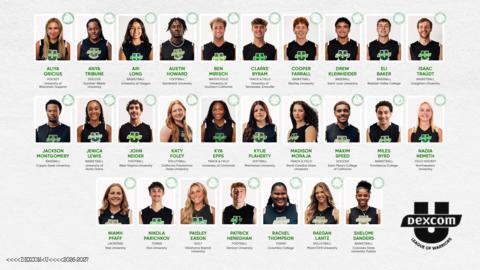
Dexcom U’s season five roster features 27 athletes with Type 1 diabetes across 13 sports, marking the program’s largest roster to date.
Now in its fifth year, this marks the program’s largest and most expansive roster to date, featuring 27 college athletes, 12 new and 15 returning, across 13 sports. The expansion is backed by new research showing that programs like Dexcom U have the potential to improve confidence, reduce stigma and barriers to athletic participation, and empower young athletes with diabetes to pursue their ambitions without limits.1 Dexcom U athletes receive access to exclusive events and mentorship from elite athletes including Mason Miller (San Diego Padres), Mark Andrews (Baltimore Ravens), Adonai Mitchell (New York Jets), Josh Gesky (Green Bay Packers), and Jordan Morris (Seattle Sounders)—and a supportive network of peers who champion each other on and off the field.
Each athlete relies on Dexcom continuous glucose monitors like Dexcom G7 or Dexcom G7 15 Day to manage their diabetes with real-time data delivered to their smartphone or smartwatch*, empowering them to better manage their diabetes while competing and breaking new barriers in sports and in life. The 2026-2027 Dexcom U roster includes the following athletes:
New athletes:
- Aliya Gricius, Hockey, University of Wisconsin-Superior
- Austin Howard, Football, Vanderbilt University
- Cooper Farrall, Basketball, Bentley University
- Drew Kleinheider, Baseball, Saint Louis University
- Eli Baker, Baseball, Wabash Valley College
- Jenica Lewis, Basketball, University of Notre Dame
- John Neider, Football, West Virginia University
- Katy Foley, Volleyball, California Polytechnic State University
- Kylie Flaherty, Softball, Manhattan University
- Maxim Speed, Soccer, Saint Mary’s College
- Paisley Eason, Golf, Oklahoma Baptist University
- Rachel Thompson, Tennis, Columbia College (S.C.)
Returning athletes:
- Anya Tribune, Soccer, Gardner-Webb University
- Ari Long, Basketball, University of Oregon
- Ben Mirisch, Water Polo, University of Southern California
- Clarke Byram, Track and Field, University of Tennessee, Knoxville
- Isaac Traudt, Basketball, Creighton University
- Jackson Montgomery, Baseball, Coppin State University
- Kya Epps, Track and Field, University of Cincinnati
- Madison Moraja, Track and Field, North Carolina State University
- Miles Byrd, Basketball, Providence College
- Nadia Nemeth, Field Hockey, Northwestern University
- Niamh Pfaff, Lacrosse, Yale University
- Nikola Parichkov, Tennis, Elon University
- Patrick Heneghan, Football, Denison University
- Raegan Lantz, Volleyball, Miami (Ohio) University
- Shelomi Sanders, Basketball, Colorado State University Pueblo
A diabetes diagnosis can be a life-changing moment for young athletes, often bringing fear and uncertainty about whether their athletic dreams are still possible. In those early days, many look to role models living with Type 1 diabetes for inspiration. Dexcom U athletes started their journeys in that same place, wondering if a diagnosis meant the end of their athletic dreams. Today they are competing at the collegiate level and using their platforms to send a clear message to the next generation: diabetes does not have to stand in the way of pursuing your dreams.
“Football has been a part of my life for as long as I can remember, so when I was diagnosed with Type 1 diabetes when I was 15, it forced me to reimagine how I train and fuel my body. With the support of my coaches, I was able to come back stronger than ever,” said Austin Howard, Vanderbilt University football player and first-year Dexcom U athlete. “I’m excited to join Dexcom U and be part of a community that understands the challenges of being a student athlete with diabetes and are determined not to let it stop us.”
Dexcom U Days create moments of connection and mentorship for the next generation of athletes with diabetes
This fall, Dexcom will host “Dexcom U Days” at select Dexcom U athletes’ games across the country, bringing youth athletes with diabetes together with Dexcom U athletes in a meaningful way, creating the kind of connection many collegiate athletes wish they had when they were first diagnosed. Fall Dexcom U Day games include:
- October 9: Raegan Lantz, Volleyball, Miami of Ohio vs. Central Michigan University
- October 10: Austin Howard, Football, Vanderbilt University vs. Ole Miss
- October 10: Ben Mirisch, Water Polo, University of Southern California vs. UC San Diego
- October 10: Maxim Speed, Soccer, Saint Mary’s College vs. Pacific University
New research shows mentorship and technology drive confidence for athletes with diabetes
Building on its 2022 research, Dexcom conducted a new survey examining how a Type 1 diabetes diagnosis shapes sports participation, mental health and daily life. The 2026 findings reveal persistent barriers to athletic engagement—but also promising shifts in attitudes and representation within the diabetes community:
- More young adults with Type 1 diabetes are sticking with sports. The percentage who quit sports after diagnosis dropped from 24% to 16%, while overall sports participation rose to 85% from 81%.¹
- Isolation and stigma are declining. Young adults with diabetes reporting frequent loneliness dropped to 15% from 28%, and those feeling embarrassed because of Type 1 diabetes dropped to 12% from 20%.¹
- Visible role models and mentors would make a real difference: 77% of young adults say awareness of athletes with Type 1 diabetes would help newly diagnosed individuals, and 82% feel more represented seeing people with diabetes in sports and media.¹ Among those surveyed with a diabetes mentor, 92% report a positive experience.¹
- Diabetes management remains a barrier. Among those who quit sports, 62% feared low glucose levels, while 54% found managing diabetes during activity too complicated (up from 42%).¹
- CGM users report greater control and confidence. Those who started CGM use within a year of diagnosis reported significantly lower rates of glucose control difficulties (11% vs. 28%), fear of lows (22% vs. 54%), and mental burden (18% vs. 34%) compared to later adopters.¹
To learn more about Dexcom U, visit www.dexcom.com/dexcomu.
Survey Methodology
The survey was conducted online from July 8-14, 2026, among 1,004 U.S. adults with Type 1 diabetes or parents of children under age 18 with Type 1 diabetes. Respondents included both continuous glucose monitoring (CGM) users and non-users and were recruited from the dQ&A U.S. Patient Panel to reflect the age distribution of the U.S. Type 1 diabetes population.
About Dexcom
Dexcom empowers people to take control of health through innovative biosensing technology. Founded in 1999, Dexcom has pioneered and set the standard in glucose biosensing for more than 25 years. Its technology has transformed how people manage diabetes and track their glucose, helping them feel more in control and live more confidently.
Dexcom. Discover what you’re made of. For more information, visit www.dexcom.com.
*Smart device sold separately. For a list of compatible devices, visit www.Dexcom.com/compatibility.
1 Dexcom, data on file, 2026
View source version on businesswire.com: https://www.businesswire.com/news/home/20261006690020/en/
Media gallery